Life is Bios and Zoe

So you wake up and jump out of bed excited to begin another day. Your thoughts have already transitioned from the prior day and you are focused on the next steps and then the next and then the next.

Now there are some people who wake up and their minds go directly to God. Probably in thanksgiving for making it to another day or maybe with prayer for an answer or relief from suffering.

Then there are those few who wake up in awe of life. I am breathing. My heart is beating. My brain is thinking. I am alive.

They have a deep sense of God in their lives. They are awed by their very existence.

The depth of the miracle of life is not lost on these. But the details of how it all works, may remain obscure 

How does this body of sinew, bone, muscle, water, chemicals, skin, tissue keep operating without an obvious consistent energy source? How is life given and sustained? That is, until something happens that interferes with the bodily functions enough to cause it all to stop.

The human body is an incredible feat of biological engineering, yet without “Life in the Absolute,” it remains inanimate. To understand this, it is helpful to look at two Greek words for life used in the New Testament: Bios and Zoe.

  • Bios (Bιˊος): This is our physical, biological machinery—the bone, chemistry, and DNA that comprise the body. It is finite and subject to death.
  • Zoe (Zωηˊ​): This is “life in the absolute”—the eternal life of God shared with humanity.

Think of a lightbulb: Bios is the glass, filament, and physical structure, while Zoe is the electricity flowing through it.

As Christians, we view the human person as a unity of body, soul, and spirit. The body is our physical presence; the soul (mind, will, and emotion) is our internal expression; and the spirit is the unseen “breath of God.”

While we have confidence in the scientific reality of Bios, we recognize that our existence isn’t just a matter of chemistry. We are sustained by Zoe—a life that death cannot touch.

Zoe describes the eternal life of God, which He shares with humanity.”

We are primarily taught by Biblical teachers that God is love. But what is equally important and true, is that God is life.

Without God, life is impossible. And, with God there is life in abundance. This describes a life that is not just physically sustained, but spiritually overflowing with purpose, joy, and peace.

We may never fully grasp what it means to be made in the image of God, but we can certainly live out the result of it. God is Life, and we are partakers of that Life and our presence should naturally displace darkness, and hopelessness wherever we stand. We don’t have to be loud to be effective; we just have to be connected to the Source.

So, the next time you wake up and your feet hit the floor, take a moment before the ‘next steps’ begin. Feel the breath in your lungs—that’s your Bios. But then, acknowledge the current flowing through the bulb—that’s your Zoe. You aren’t just a body of sinew and bone navigating a busy day; you are a vessel of the Divine, poured into and breathed upon. As you go into your home, your office, or your community, remember that you aren’t just carrying a schedule—you are carrying Life.

Perhaps the greatest miracle isn’t that the body works, but that the Creator chose to dwell within the machinery. We are never alone, never forsaken, and never truly empty. We are sustained by a source that does not run dry and a memory of a Face we have yet to see but have always known.

When we live from our Zoe instead of just our Bios, we stop merely “surviving” the day and start lighting the world.

We are twice-breathed beings. The first breath, the Breath of Life, made us living souls; the second breath, the indwelling of the Holy Spirit, sustains us for the journey and connects us solidly to God’s eternal life. One got us started; the other brings us home. Stay tuned as we dive into the mystery of the Spirit’s role in moving us from mere Bios to “Life in the Absolute.”

God, bugs and breezes

0 Outdoor Bench

Have you ever spotted a beautiful outdoor scene from a distance—perhaps a white, wrought-iron bench nestled deep within flowering bushes—and imagined how wonderful it would be to sit there?

But when you actually walk into the scene and sit down, you are extremely disappointed to discover there are hanging spiders and stinging bugs everywhere. Your hope for comfortable, solitude vanishes.

Now consider a different scenario: You meticulously planned out a speech but, during the delivery, a persistent breeze kept closing the page you were speaking from? You kept trying to hold the page down, but the breeze has other plans. And, as a result, you cut your speech short and got a less than expected response. You wondered if it would have been better if you’d let the breeze turn the page.

These two scenarios seem, on the surface, to be totally unrelated. They are, if you’re looking from a world view. They aren’t, if you’re looking from God’s omniscience: i.e. that eternal, purposeful viewpoint that sees the end from the beginning

From our human view, it’s easy to see bugs and spiders as only “pests” that mess up an idyllic scene. Looking from God’s view, however, we can see that the lovely scene is only possible because of the pests. Without them, the flora that so beautifully frames the scene would vanish.

This is because plant life is supported by a self-sustaining, organized, divinely designed system and “pests” are assigned the major role of keeping it going.

Roughly 75 to 80 percent of all flowering plants rely on insect pollinators. Spiders eat almost any insect that moves preventing pest outbreaks that could strip a plant bare. Insects breakdown dead leaves and animal waste and recycle nutrients back into the soil so plants can absorb them. Ants and ground-dwelling spiders tunnel and create “highways” in the dirt to allow water and oxygen to reach plant roots, preventing the soil from becoming too compact for plants to grow.

This is Ecosystem 101, but it is easily forgotten when it gets in the way of our comfort and pleasure.

Moving to the second scenario: From the human view, we never like it when our best-laid plans “go awry.” In fact, this quote from “To a Mouse” (written by Robert Burns in 1785) describes “grief and pain, instead of promised joy” as the result of man’s plans going wrong.

Again, our limited “in the moment” human view prevents us from seeing from God’s omniscience. In this scenario, we see that when we look from God’s view there is intention for everything.

It’s exasperating when things don’t go as planned, but even more so when you are wrestling to keep things from going off the rails in front of a room full of people. It feels even worse when you, as the speaker, announce before talking that “this is the passage I always preach from on these type of occasions.”

But, before you get one word out of your mouth, the breeze-inspired page-turning started. At first, you try to casually bend the page and then you try bending the book’s spine. When that doesn’t work, you try placing a few heavy objects on the book but they keep rolling off the slanted podium.

Next, you give instructions to have the fan aimed at the podium turned off .

The page keeps flipping.

Then you ask to have the room’s air conditioning turned off. Once this was done, the room quickly heats up, and beads of sweat show up on brows across the room.

And still, the page keeps flipping.

Finally, you enlist someone to hold the book open. This effectively brings the errant page into compliance.

But, totally distracted by efforts to keep the page from flipping, you leave the text earlier than planned and go directly into the ceremonial part of the event.

Just like the bug and spider seem to be unwelcome pests in the world view but are indispensable supporters of nature from God’s view; a breeze messing up a well-planned talk might have resulted in a better outcome if we had stopped “kicking against the goad” and let the page turn. Unfortunately, we’ll never know.

Whether it is the “pest” that interrupts our peaceful garden or the “breeze” that blows our best-laid plans off course, from God’s perspective there is no accidental interruption. What we perceive as a nuisance is often a vital gear turning in a much larger, divine ecosystem designed for our ultimate good.

Have you ever spotted a beautiful outdoor scene from a distance—perhaps a white, wrought-iron bench nestled deep within flowering bushes—and imagined how wonderful it would be to sit there?

But when you actually walk into the scene and sit down, you discover there are hanging spiders and stinging bugs everywhere.

Now consider a different scenario: You meticulously planned out a speech but, during the deliverery, a persistent breeze kept closing the page you were speaking from? You kept trying to hold the page down, but the breeze has other plans. And, as a result, you cut your speech short and got a less than expected response. You wondered if it would have been better if you’d let the breeze turn the page.

These two scenarios seem, on the surface, to be totally unrelated. They are, if you’re looking from a world view. They aren’t, if you’re looking from God’s omniscience: i.e. that eternal, purposeful viewpoint that sees the end from the beginning

From our human view, it’s easy to see bugs and spiders as only “pests” that mess up an idyllic scene. Looking from God’s view, however, we can see that the lovely scene is only possible because of the pests. Without them, the flora that so beautifully frames the scene would vanish.

This is because plant life is supported by a self-sustaining, organized, divinely designed system and “pests” are assigned the major role of keeping it going.

Roughly 75 to 80 percent of all flowering plants rely on insect pollinators. Spiders eat almost any insect that moves preventing pest outbreaks that could strip a plant bare. Insects breakdown dead leaves and animal waste and recycle nutrients back into the soil so plants can absorb them. Ants and ground-dwelling spiders tunnel and create “highways” in the dirt to allow water and oxygen to reach plant roots, preventing the soil from becoming too compact for plants to grow.

This is Ecosystem 101, but it is easily forgotten when it gets in the way of our comfort and pleasure.

Moving to the second scenario: From the human view, we never like it when our best-laid plans “go awry.” In fact, this quote from “To a Mouse” (written by Robert Burns in 1785) describes “grief and pain, instead of promised joy” as the result of man’s plans going wrong.

Again, our limited “in the moment” human view prevents us from seeing from God’s omniscience. In this scenario, we see that God’s view shows intention for everything.

It’s exasperating when things don’t go as planned, but even more so when you are wrestling to keep things from going off the rails in front of a room full of people. It feels even worse when the speaker makes an announcement before talking that “this is the passage I always preach from on these type of occasions.”

But, before the speaker got one planned word out of his mouth, the breeze-inspired page-turning started. At first, he tried casually bending the page and then he tried bending the book’s spine. When that didn’t work, he tried placing a few heavy objects on the book but they kept rolling off the slanted podium.

Next, he gave instructions to have the fan aimed at the podium turned off .

The page kept flipping.

Then came the order to turn off the room’s air conditioning. Once this was done, the room quickly heated up, and beads of sweat showed up on brows across the room.

And still, the page kept flipping.

Finaly, someone was enlisted to hold the book open. This effectively brought the errant page into compliance.

But, totally distracted by efforts to keep the page from flipping, the speaker left the text earlier than planned and went directly into the ceremonial part of the event.

Just like the bug and spider seem to be unwelcome pests in the world view but are indispensable supporters of nature from God’s view; a breeze messing up a well-planned talk might have resulted in a better outcome if we had stopped “kicking against the goad” and let the page turn. Unfortunately, we’ll never know.

Whether it is the “pest” that interrupts our peaceful garden or the “breeze” that blows our best-laid plans off course, from God’s perspective there is no accidental interruption. What we perceive as a nuisance is often a vital gear turning in a much larger, divine ecosystem designed for our ultimate good.

Instead of “kicking against the goads” of a difficult moment, we can choose to lean into the shift. We can view these moments not as failures, but invitations to stop fighting to hold down the page.

By surrendering our limited view to His omniscience, we find the wisdom described in Proverbs 16:9: “In their hearts humans plan their course, but the Lord establishes their steps.”

The next time your expections fail or your plans are “messed with,” take a breath and look again from God’s view.

Romans 8:28 promises that all circumstances come together —both the comfortable and the “pest-filled”—for our ultimate good.

Spiritual Ambidexterity

After a powerful mental download on the theological tension of the transcendence and immanence of God, the realization came flooding in that to think of God – who both knows the number of hairs on our head and who created the world – in one thought (equally, at the same time) takes some serious spiritual ambidexterity.  But this is where the Truth of our faith lives: i.e. in the theological tension between the majesty and the intimacy of God.

To lose one is to lose the full Truth. The danger is that we “make God in our image” and reduce the Incomparable, Omniscient, and Transcendent, Alpha and Omega to fit into our human boxes.

Unfortunately, much of the church today skips over this most important aspect of the faith; called the “Divine Paradox,” which is a common theological concept used by Christian scholars and mystics. As a result of this omission, modern religious circles tend to lean too far to one side or the other. They either make God a “cold, distant clockmaker” or a “genie/buddy.”

Jesus Christ, of course, is the perfect embodiment of the Divine Paradox. But even considering that He was equally human and divine, His humanness was what He held “front and center” during His walk on the earth. In fact, according to Philippians 2:6, “though He was in the form of God, (He) did not regard equality with God as something to be exploited.”

The irony is that while Jesus refused to exploit His divinity, we as humans often trend toward the opposite; we exploit His humanness. We emphasize His earthly relatability to the point of stripping away His holiness and majesty. Essentially, using Jesus’ humanity as a license to keep God at our level.

True spiritual ambidexterity, then, requires us to stop choosing between His hand and His halo.

Bringing back the Divine Paradox to the central place in our faith is actually a way of returning to a more ancient, robust version of faith that isn’t afraid of exercising brain cells. It is a beautiful “brain exercise” to reach for the hand of the Brother who wept at the grave of Lazarus, while simultaneously standing in awe before the One who created the heavens and the earth.

This isn’t a contradiction; it’s the Gospel.

It is more than okay to use terms like juxtaposition and dissonance to describe Divine Paradox. In fact, it’s perfect. In music, dissonance creates the tension that makes the resolution beautiful. The tension is the perfect faith builder. It’s like spiritual isometrics – the muscle grows by holding two opposing weights at the same time.

The Truth is a paradox. If we only see God as the transcendent king, we lose the intimate friend who counts every hair on our heads and knows our deepest thoughts. But if we only see Him as the Friend who says, “It’ll be just you and Me, babe!” and forget His holiness, we are no longer thinking of Him in Truth.

It takes immense “brain power” to hold both sides of this divine juxtaposition equally, at the same time, in one thought. But it is imperative that we try, anyway, until it becomes natural and comfortable.

As in almost every other thing in our lives “Practice makes perfect.” Making the effort will yield the most truthful knowledge of God.

Beautiful Longing

man on beach watching sunrise feeling God's glory

Her unmarried teenager daughter got pregnant. She was devastated and really mad!

She confided in a Christian friend. The suggestion was that she pray and read the Bible more in order to get closer to the Lord and find some peace. She did and over the next few years did well with the whole situation. She was able to see the blessing of her new grandchild and the positive changes in her daughter.

Two years later, her still unmarried daughter became pregnant again. She was devastated – again. She reached out to her Christian friend but when the previous advice to lean into the Lord was reinforced she angrily responded, “That might work for you but it doesn’t work for me!”

It became clear that her relationship with the Lord was transactional; i.e. “If I do this, the Lord will do that.” In her mind, if she did her part by praying more, reading the Bible more and attending church more, then God would do His part and keep unpleasant things out of her life.

This worked for a while; until it didn’t.

This begged a question: “So, what can she do?” This immediately expands into “So, what can WE all do?” when we are in similar situations.

The first thought that comes is the well-worn Evangelical Christian suggestion that we are all created with a “God hole” that can only be filled by God. And that anxiety and desperation will be exchanged with peace and a feeling of well-being as the “hole” is filled with God’s presence.

But this doesn’t line up with God’s true character and nature as expressed by Jesus: “I am with you always” (Matthew 28:20) and “I will not leave you as orphans; ” (John 14:18). So there was no need to design man with a “God hole” since He is with us always.

What then? The understanding “came” that instead of a hole we all have a God-created longing for Him.

A hole describes something that needs to be filled until it disappears. Longing is “near and dear” to us. Longing doesn’t stand apart from us. Longing is a part of us. We never want our longing for God to be satisfied or disappear. We want it to remain and even be deepened, expanded.

So, what does this look like? During times of difficulty, tragedy, etc. feel the longing for God and move into it. “Pull on heaven” to enlarge and enhance your longing for God until it fills every crevice of your earthly life on to eternity! 

God inhabits our longing for Him!

Shouldn’t we be weeping?

“We are living in unprecedented times,” is a well-known phrase spoken often to describe the divided state of the world today.

The meaning is that there are no historical points of reference that can help us move through these uncharted waters of broken relationships, alliances, promises.

And, no part of our lives have gone untouched: We are fractured personally, politically, economically, societally and religiously. With the most unprecedented aspect being the breadth and depth of these divisions.

“Paper Girl” is a recently released (Oct. 2025) book that describes, what Author Beth Macy, calls “a fractured America.” It is written from the experience of someone who grew up living in poverty in a small, middle-class town in Ohio.

Macy writes about her hometown having a healthy economy and thriving schools during her youth in the ’70s and ’80s. But after leaving for college and then pursuing a far-away career in journalism, she returned in 2020 to take care of her ailing mother and discovered that her hometown had become poorer and angrier over the years. Her book chronicles how she maneuvered through relationships with old friends and relatives with whom (after years of separation) she had cavern-sized ideological differences.

Although Macy’s stories are only about a few people in one small town in America, they are also a microcosm of the sad divisions being suffered throughout the country. This is especially true in her dealings with family and friends who have wide divides from her own political ideology.

Like never before, people all over this nation and world are frantically trying to maneuver through stressed and broken relationships caused by deeply-held political and religious beliefs. Scores of professional and self-help gurus are cropping up all over the internet, offering help to people frantic to stay connected to loved ones with whom they have fundamental ideological differences.

Macy wrote about some tactics she employed with family and friends attempting to stay close or, at least, on friendly terms. Although she was forced (out of a need for self-preservation) to excommunicate some, she mostly kept doing what she called “throwing things at the wall to see what would stick” in order to keep fading bonds from dying.

She put boundaries up; refusing to talk with certain people about certain topics (mostly political). She worked to hold her tongue when some divisive topic got through her boundaries.

She did a lot of what relationship professionals are suggesting. She kept the door open when conversations got heated despite all of her attempts to keep the peace; she tried to keep people with whom connections had frayed in mind; she was deliberate about staying vulnerable whenever unavoidable encounters happened with people who had distanced themselves from her.

In one of the many recent public interviews about her book, she slipped beyond giving advice to people who asked “How do I get through Thanksgiving with my family?” into complete honesty. “It’s hard work,” Macy admitted to a packed room of people. “It really tears at the heart. It hurts.” And then she posed a question that has evaded her throughout the years of trying to heal broken relationships, “How do we love beyond what we can’t understand or agree with?”

The pivotal word in the question is “love.” How do we continue to love each other?

Almost all of the advice available to help people through this pandemic of brokenness consists of things you can “do.” However, as we have asserted many times in this blog, it is more about “being” than doing.

Acting on some of the advice is valuable; such as building a closer relationship outside of the disagreement, mining common-ground memories and shared-beliefs, asking questions to understand a different viewpoint, and avoiding confrontational language. But many times the best that these measures can achieve are “white knuckle” relationships where there is a constant need to avoid the pitfalls and deal with an underlying uneasiness.

At these times when there seems to be no real answers to the very real problems we are facing, what becomes necessary is to envision and move into a “new reality.” How about getting really honest with ourselves about the immense losses we have suffered? How about getting in touch with the sadness this has caused us? How about grieving the loss? How about weeping?

Walter Brueggemann, author of “Prophetic Imagination,” wrote that grief is a necessary step in moving from denial to hope to healing after the destruction of certainties in our lives. An honest expression of the loss will pave the way.

By engaging our grief, we can break free of our past into a refreshing newness found in God – an authentic end of the old and the beginning of the new.

Jesus is our reference point. He refused to accommodate, what Brueggeman calls the “royal consciousness,” which blocks us from imagining a new reality and forbids the grieving that would usher it in. Jesus refused to abide by the world’s reality where new arrangements and configurations are mostly just rearrangements of the same old pieces.

He spoke out another reality that gives way to real change. 

Jesus wept.


Lord, help me, I pray, to open my heart. May I grieve for the pain in this world. When I see injustice, racism, oppression, and violence, may I mourn. Help me not to harden my heart, Lord, even and especially against those with whom I disagree, or those whose behavior I disparage. As I weep over the state of our world, may I also join you in your mission of peace. Amen.(Derived from the writing of Dr. Mark D. Roberts, a senior fellow for Fuller’s Max De Pree Center for Leadership.)

Image: “Jesus Weeps” by Linda Richardson

Love your neighbor

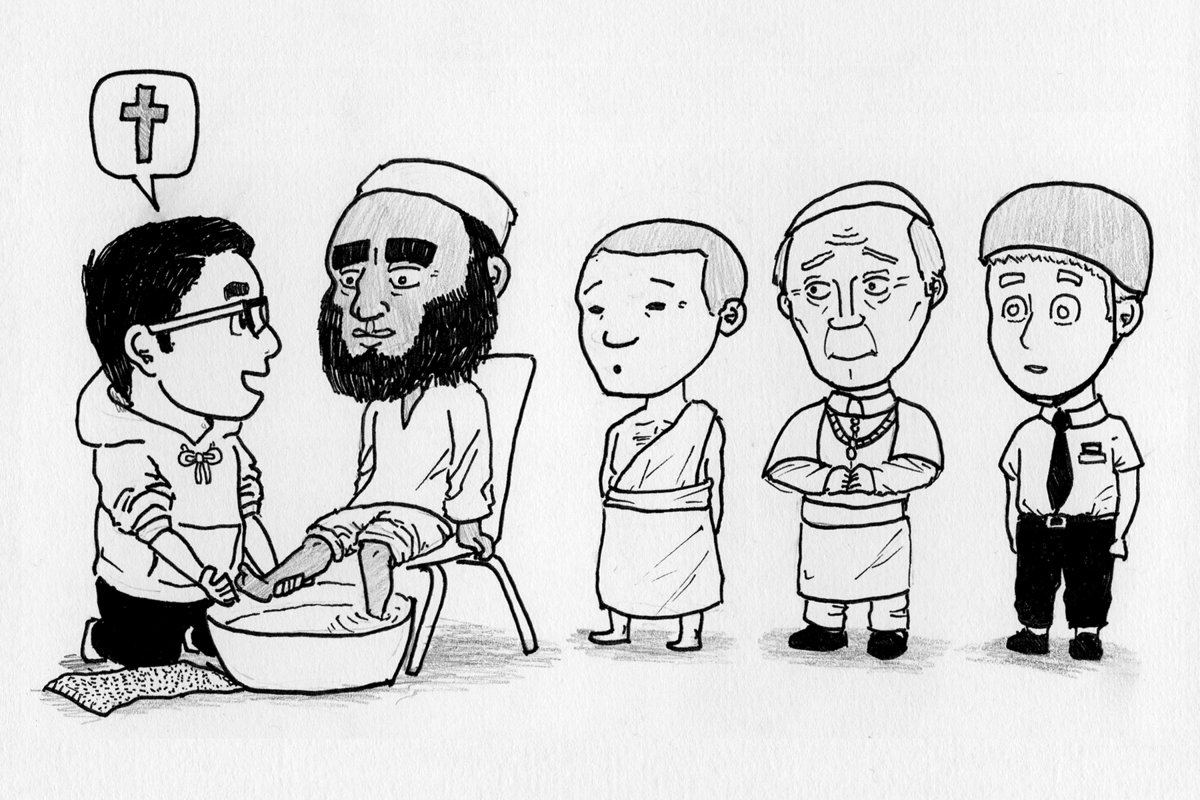
Love your neighbor, no exceptions - The Chimes

Illustration by David Rhee/Chime

A child dies at home.

The police are called about a child not breathing and rush to the residence. The exterior of the home looks much like others in the suburban-like neighborhood where homes are close. From the outside view, there is little evidence that all is not well with this family.

That all changed when the police open the front door to expose rooms full of garbage and mold and find an six-month-old child dead inside. The medical examiner’s report attributes the death of the youngest member of the nine-child family to the conditions within the home.

Neighbors gathered in the street are interviewed by local news media. They say that they called the police about suspected problems with the family several times. One neighbor says she “knew” no one would do anything until one of the children “passes away.”

Strangely and tragically, that’s exactly what happened.

What seems to be in play here is what is called a self-fulfilling prophesy, which is an expectation that brings about its own fulfillment. If you believe something to be true, you’ll act as if it were true.

A self-fulfilling prophesy can influence behavior (positive or negative) in a way that ushers the belief into reality. Essentially, it can shape action that leads to those expectations being realized. 

Expecting something to go wrong, you might fail to take steps that could turn things around.

“These expectations can play a part in stereotypes, racism, and discrimination,” according to Kendra Cherry, a psychosocial rehabilitation specialist and psychology educator. “Expecting the worst brings out the worst.”

Whether or not the real-life psychological effect of self-fulfilling prophecy was a factor in the death of this child is conjecture, since the truth will only be revealed as much as those involved are interested in revealing it. One thing is for sure, however: The people who knew or suspected that this child was in danger and failed to take action (other than making calls to authorities), will feel the weight of their inactivity for a long time and maybe for the rest of their lives, as would any of us, under similar circumstances.

So many questions. Did any neighbor go inside the house and see the severe unhealthy conditions? Did any neighbor offer to help if they knew the dangers inside? Was assistance offered but rejected by the adults living in the house? Did any neighbors befriend the family?

This incident – involving actual neighbors – brings much clarity to Jesus’ words written in Matthew 22:36-37. “And one of them, a lawyer, asked him a question to test him. “Teacher, which commandment in the law is the greatest?” He said to him, “‘You shall love the Lord your God with all your heart, and with all your soul, and with all your mind.’ This is the greatest and first commandment. And a second is like it: ‘You shall love your neighbor as yourself.’ On these two commandments hang all the law and the prophets.”

A commandment to love? This doesn’t seem like something you can or should command. How can you make or require someone to love; whether God, another human or, really, anything?

But this is Jesus (Emmanuel – God with us) saying this, so it has to be right and true. Understanding comes by looking at the original language used in Matthew, which is Greek.

The word “love” at the center of this Bible passage is a translation of the Greek word “agape.” Knowing this, it is easier to understand why Jesus would issue a command to us to “love” God and each other. This is because the Greek word agape doesn’t describe a feeling, especially a mushy feeling.

Rather, it describes a God-created force that is felt in some way or form by every entity in the universe from atoms up to entire societies, according to biblical scholar Arie Uittenbogaard, an Abarim Publications writer. So, Matthew was not as much commanding us to generate a personal feeling for God, ourselves, and others but highlighting the concept that we are created with a natural “love” force that compels us into action to help others.

Agape is God’s love language. It isn’t something we choose to feel, it is established by God, into every inch of his creation. Agape love is something we will do – just as Jesus commanded – naturally, unless we choose not to. Doing or being better for our “neighbor” is about believing in, and saying “yes” to our God-created design. We were made for this!

Holy beings created by a Holy God

We are holy as our Creator is holy.

A holy Creator can only create that which is holy.

Just as parents pass on their DNA to their children, a holy creator passes on his holy DNA to His creation.

Holiness is a condition of being and not doing. We aren’t holy because we act holy. We are holy because we are created holy.

The direction given by God in Leviticus 19:2 that the Israelites “shall be holy” is not a command to be carried out. It is a pronouncement about the truth of our being. This is who we are.

This is understood through the definition of holy in both the dictionary meaning and in the Biblical context. In each, the definition of holy does not include any suggestion that holy is a condition that can be achieved.

The dictionary definition of holy is “dedicated or consecrated to God” and the Hebrew word for holy is “qodesh,” which means “apartness, set-apartness, separateness, sacredness.”

There is no evidence that holiness is something we can gain through behavior. Also, nothing in the definition suggests that holiness, once conferred, is something that can be lost through behavior.

Even in 1 Peter 1:16 the urging to be holy “in all your conduct” is directly tied to the pronouncement that all God’s created humans (and all His creation) are created to be holy as He is holy. “You shall be holy, for I am holy.” Stating the truth about our created holy condition, Peter is desiring that our actions be in accord (line up) with our created holy condition.

If this wasn’t the case, what conduct is Peter suggesting would cause us to be holy; i.e. dedicated to God, set apart, and sacred?

No, Peter is telling his Gentile audience the “good news” that they are created holy and that it would be good for them to conduct themselves in accord with this truth.

It is through our holy God-created nature that we understand the meaning of sin. Since we are created holy, falling short of that causes pain and suffering – to ourselves and others. This is sin.

Our moral compasses are set to guide us in our holiness. Acting contrary to that nature often causes us great discomfort. It’s what we refer to as a guilty conscience. Our conscience has been identified by sociologists, psychologists, and behaviorists as “an internalized set of values and objectives that guide a person with regard to ethical behavior and decision-making.”

Just as Adam and Eve hid and lied as a result of the shame they felt from using – for the first time – their freewill in opposition to God’s will, we know when we are not acting in accord with our created holy nature. As a result, we perform all kinds of gyrations (sometimes going to great lengths) to hide our sin.

Sin causes us to hurt others (as well as ourselves) blame others, cheat, steal, and anesthetize our shame with all sorts of addictions and dangerous behavior.

Hearing the truth about our created holy nature should have been good news to Peter’s audience and it should be to us. We don’t need to strive to be holy, as has been taught for many years in the Church. We are already holy. We have the Holy Spirit living within us. “Or do you not know that your body is a temple of the Holy Spirit within you, which you have from God . . . ” 1 Corinthians 6:19

God’s gift of free will, given to His human creation, gives us the ability to decide to act in opposition with our created holy nature. This is clearly seen in the story of Adam and Eve. But when we veer into sin, our holy nature beckons – urged on by the Holy Spirit within us – a return to “be holy, as I your God am holy.”

However, it is clear that living without sin, which means acting in accord with our created holy nature, is an impossibility without Jesus’ Spirit.

From creation to the time when Jesus walked the earth, man had veered widely away from acting in accord to his created holy nature. According to Isaiah 9:2, Jesus came to “people who walked in darkness” and “dwelt in a land of deep darkness.”

They had lost their way.

Jesus came to live among men to reintroduce them to their Holy Creator, reveal God as their unconditional loving spiritual Father, and expose the “lost” human condition steeped in sin and the truth of man’s created holy nature. In all ways, Jesus was resetting man’s moral compass and pointing it to the Father. He was the example of living an earthly life in perfect accord with His holy nature.

Best of all, Jesus sent His Spirit as our helper

Hallelujah!

Loving God or Angry God?

Which did you hear about in Cathechism, Sunday School?

What do you know? God is even better than we ever imagined. More loving. More freeing. More intimate.

What good news!

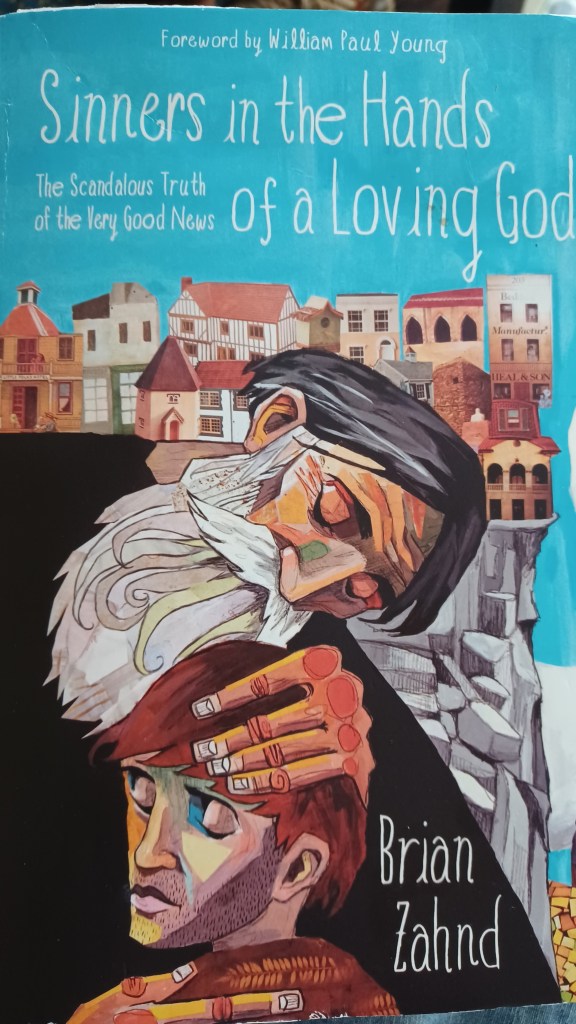
This was the reaction of a small group of mostly Catholics at being introduced to “Sinners in the Hands of a Loving God.” Brian Zahnd’s book began a years-long discovery of a modern Christian movement, which we have come to know as “The Beautiful Gospel”.

Our exuberance for Zahnd’s book and its message has not waned over the years. In fact, it had been bolstered over-and-over again with the discovery of subsequent books by Zahnd and other writers who carry similar and related messages, including Brad Jersak, C. Baxter Kruger, William Paul Young, and Fr. Richard Rohr.

So what do you do with over-the-top good news that is so good that it begs to be shared? Our immediate thought was to host an online book club to explore the books of the “Beautiful Gospel” writers with others. So, we did.

It seemed natural to start with the book that drew us into this journey and that led us to a God a thousand times more loving than we ever learned in Sunday Mass, weekly catechism classes, and summer school led by black and white-clad nuns.

An open invitation was posted on every available social media outlet to which we had access. We advertised the book club as a “no judgment” discussion around thought-provoking questions.

As we waited for responses, it came to us that Zahnd might have written his book for more of a Protestant/Evangelical audience but that our fellow Catholics would also benefit greatly from meeting a better-than-we-knew Creator. We were hopeful that at least a few potential book club members would be Catholics.

What a surprise when the response resulted in the book club members being 100 percent Catholic! To clarify, the final count was four with all but one being members of the hosting team.

From the very first meeting, our suspicion about Zahnd writing his book primarily for a non-Catholic audience became more certain. All of the members knew nothing growing up of Jonathan Edwards’ famous 1741 sermon “Sinners in the Hands of an Angry God,” which was the focus of Zahnd’s book. The sermon was preached to Edward’s own congregation in Northampton, Massachusetts.

Also, the idea of God being angry or mean was not something that the book club members recalled as being a part of their religious upbringing. The God in Catholic formation teaching was loving, kind and a wonderful Father, the members reported.

The over-the-top description, in Edwards’ sermon, of a God who “holds you over the pit of Hell, much as one holds a spider, or some loathsome insect, over the fire” was not only totally foreign to the Catholic membership growing up but completely rejected as the truth during the club’s discussions. Similarly rejected as truth was Edward’s even more hateful rhetoric that God “abhors you, and is dreadfully provoked; His wrath towards you burns like fire, He looks upon you as worthy of nothing else but to be cast into the fire.”

That this sermon was accepted as truth and highly influential among Protestant Christians, was a puzzle to members of the book club. They were dismayed to read that Edward’s “angry” God theme influenced the believers of large segments of the Christian church and was the catalyst for the Great Awakening that ignited a revival movement among Protestants.

Edward’s use of fear, to inspire people to repent and follow Christ, is called into question by Zahnd throughout his book. Book club members were in complete agreement.

According to reports of people in attendance when Edward presented his sermon, incredible fear spread throughout the audience at hearing his words. “Before the sermon was done there was a great moaning and crying out through the whole house — “What shall I do to be saved?” “Oh, I am going to hell!” “Oh what shall I do for a Christ?” and so forth — so that the minister was obliged to desist. The shrieks and cries were piercing and amazing,” wrote Rev. Stephen Williams in his diary entry of what he witnessed during Edward’s sermon in Enfeld, Conn.

It is believed that Edward’s purpose for presenting such a terror-inducing sermon was to “awaken” Christians from a state of complacency about their faith and relationship with God into greater awareness about the consequences of sin. The responding widespread renewal to individual piety and religious devotion among Protestant Christians is seen as evidence that his purpose was fulfilled.

The movement that was born out of the Great Awakening in the United States is evangelicalism. This segment of the Christian church emphasizes individual piety, religious devotion and a belief in the necessity of being “born again.” Evangelicalism also affirms traditional Protestant teachings on the Bible’s infallibility, authority and historicity.

While all of these deeply (and long) held Evangelical beliefs were not seen as problematic to the truth about the unconditional loving nature of God, Zahnd’s book begs the question about the foundation of Evangelicalism if it was formed on the mistaken premise of an angry, retributive God as described by Jonathan Edwards in his famous sermon.

The unanimous conclusion reached by the book club members was that the faulty foundation of Evangelicalism in the United States is exactly why Zahnd wrote the book “Sinners in the Hands of a Loving God.” Having spent most of his life as a member and pastor of Evangelical churches reinforcing the vision of an angry, violent vision of God, Zahnd’s passion to counter the damage done to Christians by Edwards’ “angry God” sermon and almost 300 years of reinforcement by many other Evangelical leaders and major figures is palatable throughout his book.

This all culminates in the last chapter, “Love Alone Is Credible,” in which Zahnd blasts his heart-felt belief in a loving God all over the pages. This was the book club members’ favorite chapter.

“If John 3:16 is to mean anything, it must mean that God gets what God wants through love or not at all,” he writes among his final words. “If I believe that love never fails, it’s because I believe that God is love. To believe in the sufficiency of God’s love to save the world is not naive optimism; it’s Christianity.”

Finding the Truth

Agreement doesn’t go very deep in the Body of Christ these days. Just search Google for critics of your favorite Bible teacher or ministry leader and watch detractors come out of the woodwork.

Or, look through the Christian conference resource table and find certain “truths” being promoted in books on one end of the table and just the opposite in ones on the other end; only a few feet away.

This sows confusion at the least and deep division at its worst. So what are we to do? Where do we find truth? Who has the definitive answers?

The most often heard direction from Christians is “look in the Bible.” But that won’t get us much closer to unity of thought since many of the biggest, long-standing disagreements are about interpretation of Scripture.

“Just listen to Jesus,” is another common answer. This usually means that we should put a higher truth value on the words in the New Testament attributed directly to Jesus. But, again, the meaning of Jesus’ words as recorded by the Gospel writers have been debated, sometimes hotly, since He spoke them over 2,000 years ago.

However, regardless of the pitfalls of biblical translation, “listen to Jesus” is exactly the right answer. The first Christians knew this as Jesus words came directly from His mouth and into their ears bursting with great authority and truth, 

Jesus spoke directly to the first Christians and then (after His death, resurrection and return to sit at the right hand of the Father) made provision for all of us to also hear directly from Him. We find this in Jesus’ words recorded in John 14:13-15:When the Spirit of truth comes, he will guide you into all the truth; for he will not speak on his own, but will speak whatever he hears, and he will declare to you the things that are to come. He will glorify me, because he will take what is mine and declare it to you. All that the Father has is mine. For this reason I said that he will take what is mine and declare it to you.”

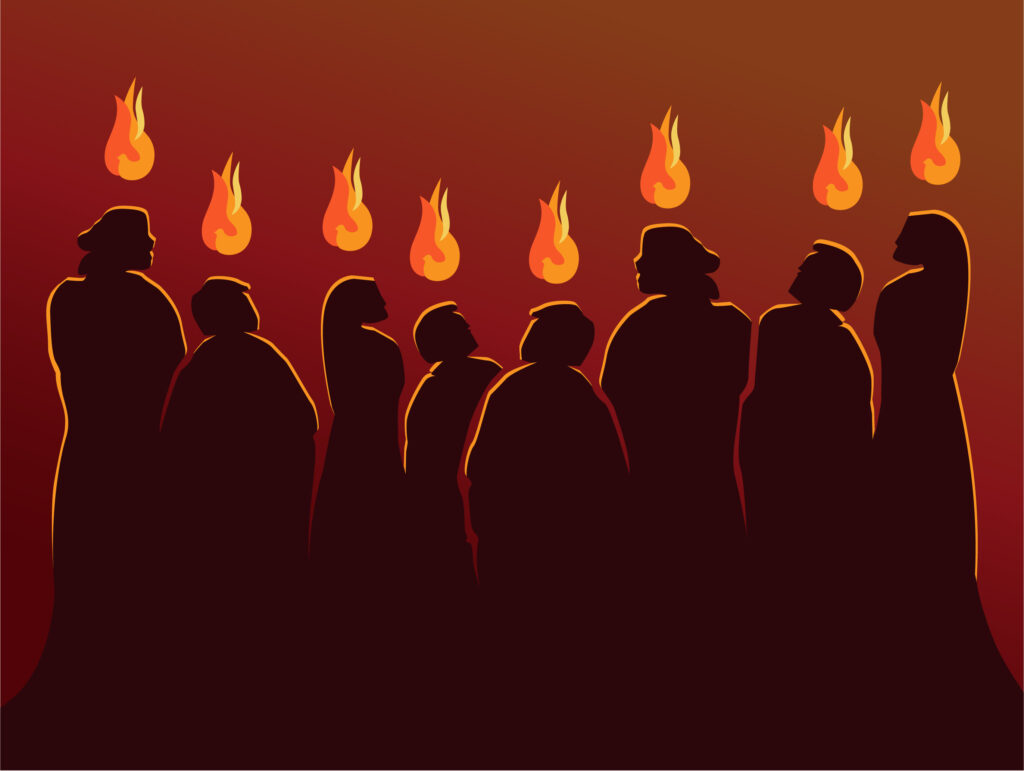
The “Spirit of truth,” of course, is the Holy Spirit who descended on Jesus’ disciples as they were gathered in one place some time after His Resurrection. Suddenly a sound like the blowing of a violent wind came from heaven and filled the whole house where they were sitting. They saw what seemed to be tongues of fire that separated and came to rest on each of them. All of them were filled with the Holy Spirit . . . “ Acts 2:2-4

So, it happened just as Jesus said. The Spirit of Truth, The Paraclete (Helper), came. And it is significant that the “tongues of fire,” depicted in the story of Pentecost, rested on each and every person present.

There is great – although not total – agreement in the Body of Christ that the fire rested on each person individually because the indwelling of the Holy Spirit is meant for each of us. We each have the ability to be guided by Jesus through His Spirit, who resides in each of us.

Believing this is Jesus’ plan for His Spirit to “guide you into all truth” (John 16:13), we must go inward to “hear” the Truth in our hearts where it will resonate.

Just as Jesus got out of the fray and bent down to write in the sand in the story of the woman caught in adultery (John 8:1-11), we need to get away from the world’s contradictions and disagreements to seek the voice of the Spirit of Truth inside.

Bartimaeus II

He moved from the economy of the world to the economy of heaven.

image

The story of Bartimaeus, more than any other in the Bible, draws clear distinction between the economy of the world and the economy of the Kingdom of God.

In the world’s economy, Bartimaeus was a poor, blind man subjugated to a life of begging in the streets. Every day the seeing public would walk passed the sightless Bartimaeus sitting in the waste of humans and animals and give him little more than a glance. The suggestion that Bartimaeus’ situation could be different, would be quickly dismissed with the thought, “What else could that poor blindman do?”

In the world economy, playing out in ancient Palestine, disabled and sick people were outcasts. This was because no illness, disease, sickness, or malady was curable. Given the permanency of their disability and the futility of their lives, they were left to their fate. Nothing good was expected for them or of them.

The blind were deeply shunned; i.e. the societal unwritten rules of behavior not only required that blind people be avoided but also extended the same to anyone who might make the mistake of interacting with them

Blindness was regarded as the lowest degradation that could be inflicted on a person. Hence, a popular form of retaliation against an enemy was to gouge out eyes.

Jews of Jesus’ day believed that bodily ailments and defects were the punishment for social or religious transgressions. The ancient Hebrews thought that the maimed, and especially the blind, possessed a debased character.

Before Jesus “stood still,” blind Bartimaeus was tied to the world like Gulliver in the satirical work of Jonathan Swift. The fictitious tiny Lilliputians in Gulliver’s Travels used ropes to restrain the giant, Gulliver, from which he could easily escape. The societal restrains that tied Bartimaeus, however, were impossible for him to escape. He was held down with no known possibility of release or escape.

This was Bartimaeus’ reality in the kingdom of the world but now having encountered the Kingdom of God he is freed. Jesus removes his restraint – his blindness – as effortlessly as Gulliver overcame the Lilliputians ropes, which were intended to keep him bound to the earth.

The prevailing attitude of the day among Jews living in the same world as Bartimaeus was that he would remain blind, poor and outcast for the rest of his life. Scripture, however, paints a different picture of Bartimaeus’ attitude. He had hope that his life could change for the better.

We are not told by the gospel writers if Bartimaeus sat every day praying for the promised Messiah, who would open the eyes of the blind (Isaiah 35:5) or if he had only just heard about Jesus as the word spread about His imminent appearance in the area where he sat begging.

Regardless, it was evident that Bartimaeus had hope: either long lived or recently raised. His impassioned cries to Jesus came out of a hope-inspired heart.

Bartimaeus’ use of “Son of David” in addressing the passing Jesus is evidence that he knew well the words of Isaiah: “For unto us a child is born, unto us a son is given: and the government shall be upon his shoulder: and his name shall be called Wonderful, Counsellor, The mighty God, The everlasting Father, The Prince of Peace. Of the increase of his government and peace there shall be no end, upon the throne of David, and upon his kingdom, to order it, and to establish it with judgment and with justice from henceforth even for ever. The zeal of the Lord of hosts will perform this.”

Blind Bartimaeus heard the crowd referring to the passing celebrity as “Jesus of Nazareth” (Mark 10:47) but he cried out “Jesus, Son of David.”

Using these words, the blind man reveals his belief that this Jesus of Nazareth person is the promised Messiah: God’s son born of a virgin. (Isaiah 7:14)

Also, had Bartimaeus been told (or possibly heard firsthand) that this Jesus of Nazareth person had boldly proclaimed in the temple to be the fulfillment of Isaiah’s prophecy? “The Spirit of the Lord God is upon me, because the Lord has anointed me to bring good news to the suffering and afflicted. He has sent me to comfort the brokenhearted, to announce liberty to captives, and to open the eyes of the blind.” (Isaiah 61:1)

Isaiah’s prophecy, written hundreds of years prior, might have been the source (in fact, the only source) of Bartimaeus’ hope that he would see again. Nothing else in his world offered any probability that he would one day – some day – be healed.

Bartimaeus accepted Isaiah’s prophecy as a promise from God. Further more, his belief wasn’t just in the promise but also in the God who would fulfill that promise in his lifetime.

Is it any wonder then that Jesus credited Bartimaeus’ faith as the source of his healing? What a faith he had. Hoping, day in and day out, in a promise made and written hundreds of years before he was born. Year-after-year holding on to the promise that one day God would come in the form of a man (Immanuel) who would “open the eyes of the blind.” (Mark 10:52)

Immediately, effortlessly, Jesus did what was impossible in the economy of the world. With the Kingdom of God at hand, Bartimaeus “regained his sight.”

Bartimaeus’ story seems to follow along the same lines as so many well-known rags-to-riches, pauper-to-prince tales that we might have heard as children propped on our grandfather’s knee.

Transition is unexpected and dramatic. Just when it looks like the sad, destitute life-in-focus will never change, something remarkable happens. A lost treasure is found. An inheritance comes from a far removed rich relative. A played number wins the lottery.

For Bartimaeus, the miraculous restoration of his sight must have felt like finding lost treasure, receiving a substantial inheritance and winning the lottery all wrapped into one. And then, even more.

His transition was total. Not one semblance, not one shred of his past life survived. He who was blind now sees. He who was considered cursed by God was now blessed. He who begged could now give. He who sat in the animal dung now walked tall.

Still Bartimaeus’ story is not like the rest. In fact, it stand’s heads and shoulders above any other.

Worldly treasure does not get credit for this man’s transition. This rags-to-riches blind man experienced, what Bishop Barron (founder of Word on Fire Catholic Ministries) describes as a breaking in of “divine life.”

In only a few minutes using only a few words, Jesus reorders Bartimaeus’ entire life by shattering the “narrow confines of nature” so that he can truly live.

Divine grace broke into Bartimaeus’ life. He received from Jesus a generous, undeserved, spontaneous gift from God in the form of divine favor, love, and a share in the divine life.

“When the Holy Spirit breaks through (bringing grace) it’s like a ride on the wind,” said Bishop Barron.

Unbelievable but true. This all happened to Bartimaeus in an instant after his encounter with Jesus who says, “Go; your faith has made you well.”

Sounds heavenly, doesn’t it? Freedom from the narrow confines of nature. Sharing in the divine life of God. Riding the wind.

The only problem is that Bartimaeus didn’t die and go to heaven – just then, anyway. He continued to walk in the same dirt, breath the same air, and eat and poop just like every other human living on the earth.

So what exactly changed?

He moved from one economy to another. From the economy of the world to the economy of heaven.